
The Science Behind Rainbow Jewellery: How Thin Film Interference Creates a Magical Colour-Changing Effect
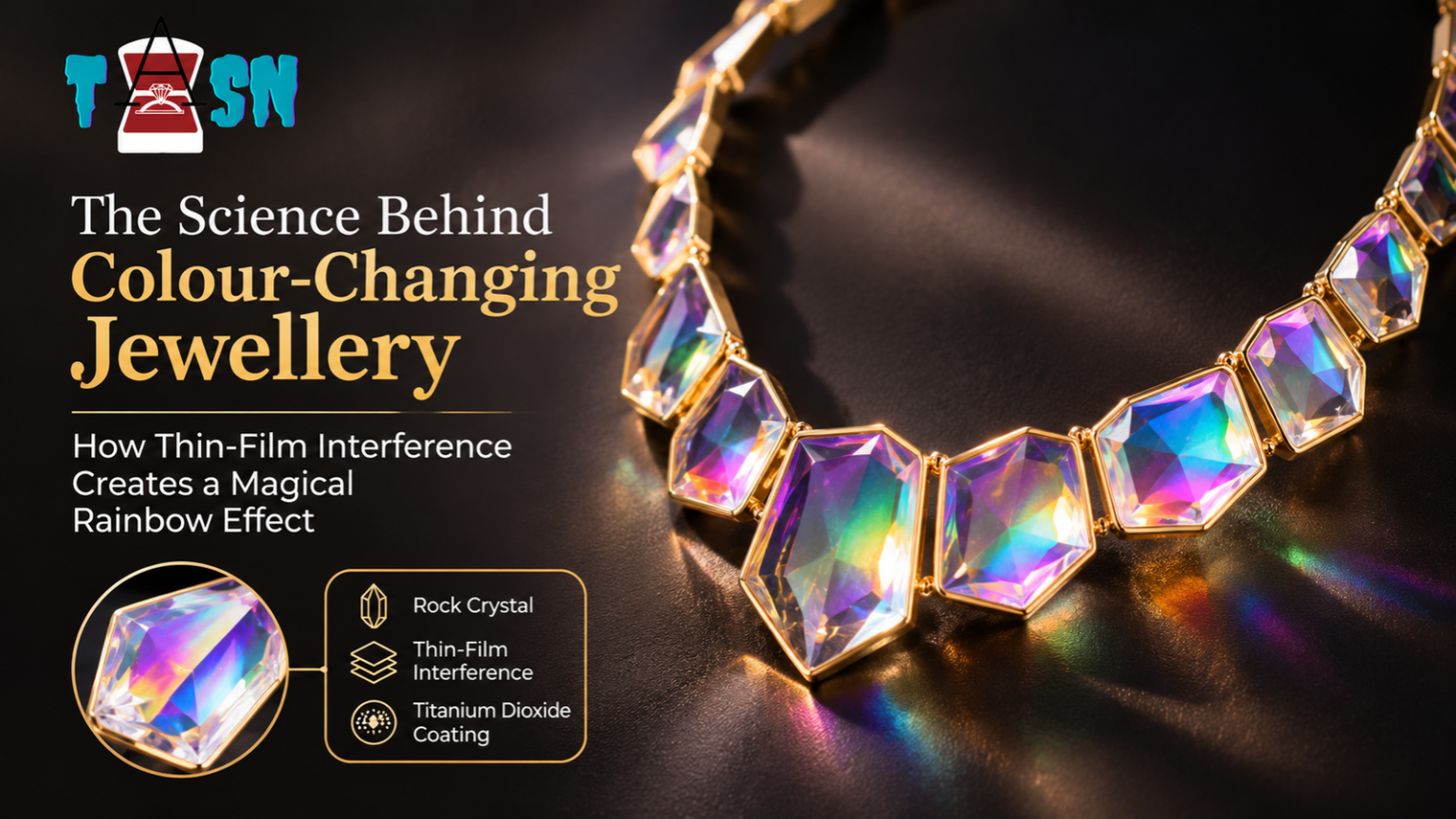
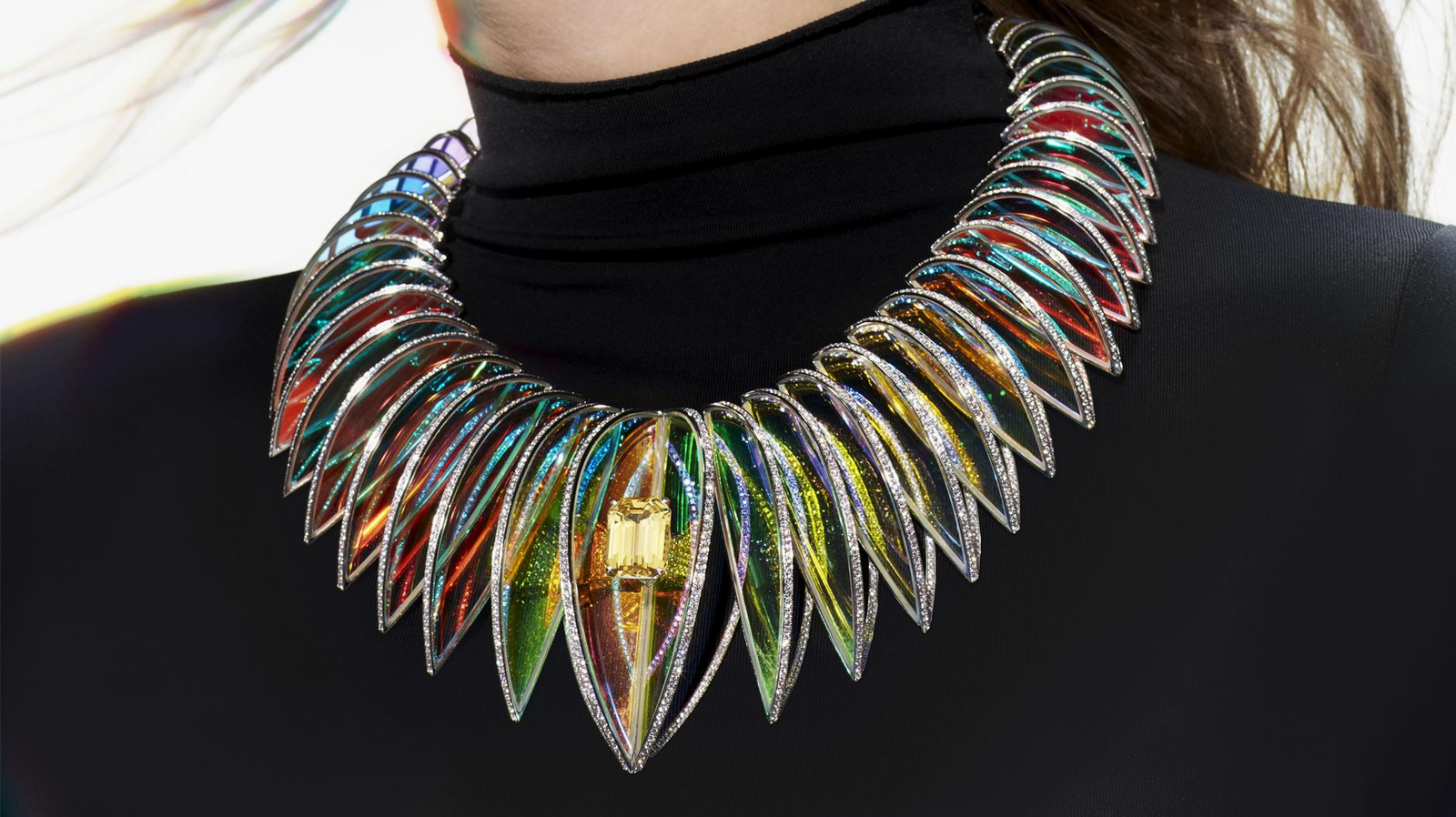
What if a necklace could change colours every time you moved it? Imagine a transparent gemstone that reflects shades of blue, purple, green, pink, and gold depending on how light hits its surface. It almost looks like magic, but the science behind this beautiful effect is even more fascinating.
This unique jewellery concept combines rock crystal, an incredibly delicate gold frame, and an extraordinary optical phenomenon known as thin-film interference.
The result is a necklace that creates a moving rainbow effect, turning a relatively simple transparent material into something visually spectacular.
But how does it actually work? And can jewellery designers recreate a similar effect without investing in expensive industrial coating equipment?
Let’s explore the science, technology, and design possibilities behind colour-changing jewellery.
What Makes This Necklace Look Like a Rainbow?
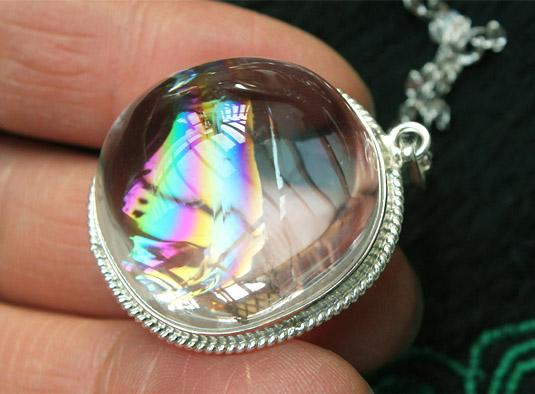
The secret behind this necklace is the combination of three important elements:
- Rock crystal: A transparent natural variety of quartz that allows light to pass through.
- Thin gold frame: A delicate metal structure that supports the crystal without distracting from its appearance.
- Colour-changing optical coating: A specially engineered surface that produces different rainbow colours depending on the viewing angle and lighting.
Unlike traditional coloured gemstones, where the colour comes from the material itself, this jewellery uses the interaction of light with extremely thin surface layers.
As the necklace moves, the reflected colours appear to shift, creating an almost holographic appearance.
The effect makes the jewellery look different from every angle.
What Is Thin-Film Interference?
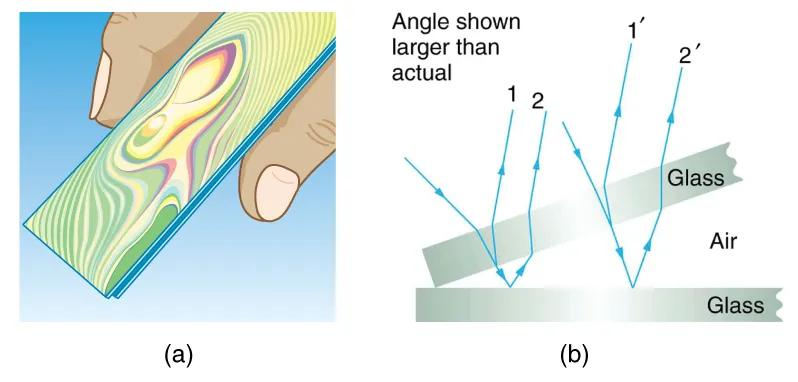
Thin-film interference is an optical phenomenon that occurs when light reflects from different surfaces of an extremely thin transparent layer.
When light hits a coated surface, some of it reflects from the outer boundary of the coating, while another portion travels through the coating and reflects from a deeper boundary.
These reflected light waves travel slightly different distances before meeting again.
Depending on their phase relationship, certain wavelengths are reinforced while others are reduced or cancelled.
This is called constructive and destructive interference.
The result is a beautiful range of colours that can change depending on:
- The thickness of the coating.
- The refractive index of the material.
- The wavelength of incoming light.
- The angle at which light hits the surface.
- The viewing angle.
This is the same basic optical principle responsible for the colourful appearance of soap bubbles, oil films on water, and certain iridescent surfaces found in nature.
In jewellery, this phenomenon creates an opportunity to produce colours without relying entirely on traditional pigments or coloured gemstones.
How Does Titanium Dioxide Create the Colour-Changing Effect?
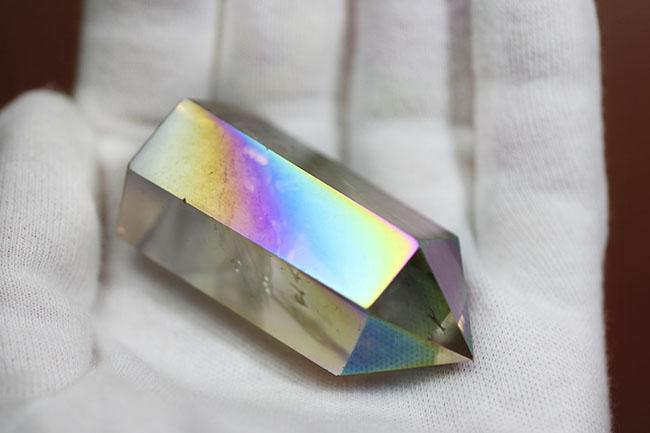
One fascinating way to produce this effect is through a very thin coating of titanium dioxide deposited onto quartz.
Titanium dioxide is a material with useful optical properties, including a relatively high refractive index.
When deposited as a carefully controlled thin layer, it can influence how light reflects from the crystal’s surface.
The coating is engineered to create specific interference effects, producing different visible colours as the viewing angle changes.
This process requires specialized equipment and precise control over the coating thickness.
One technique used for depositing such optical coatings is Physical Vapour Deposition (PVD).
During PVD, a material is converted into vapour inside a controlled vacuum environment and deposited onto a surface, forming a thin film.
For a jewellery application, this requires careful control of several factors:
- Surface preparation of the quartz.
- Selection of the coating material.
- Vacuum conditions during deposition.
- Control over the deposited film thickness.
- Optical testing to evaluate the resulting colours.
The final appearance depends heavily on the coating design and manufacturing precision.
This is why creating a consistent, high-quality optical effect can be technically challenging.
Can You Recreate This Effect Without Expensive PVD Equipment?
Here is where the idea becomes especially interesting for jewellery designers and experimental creators.
Industrial thin-film coating systems can be extremely expensive, and not every designer or small jewellery studio has access to specialized vacuum deposition equipment.
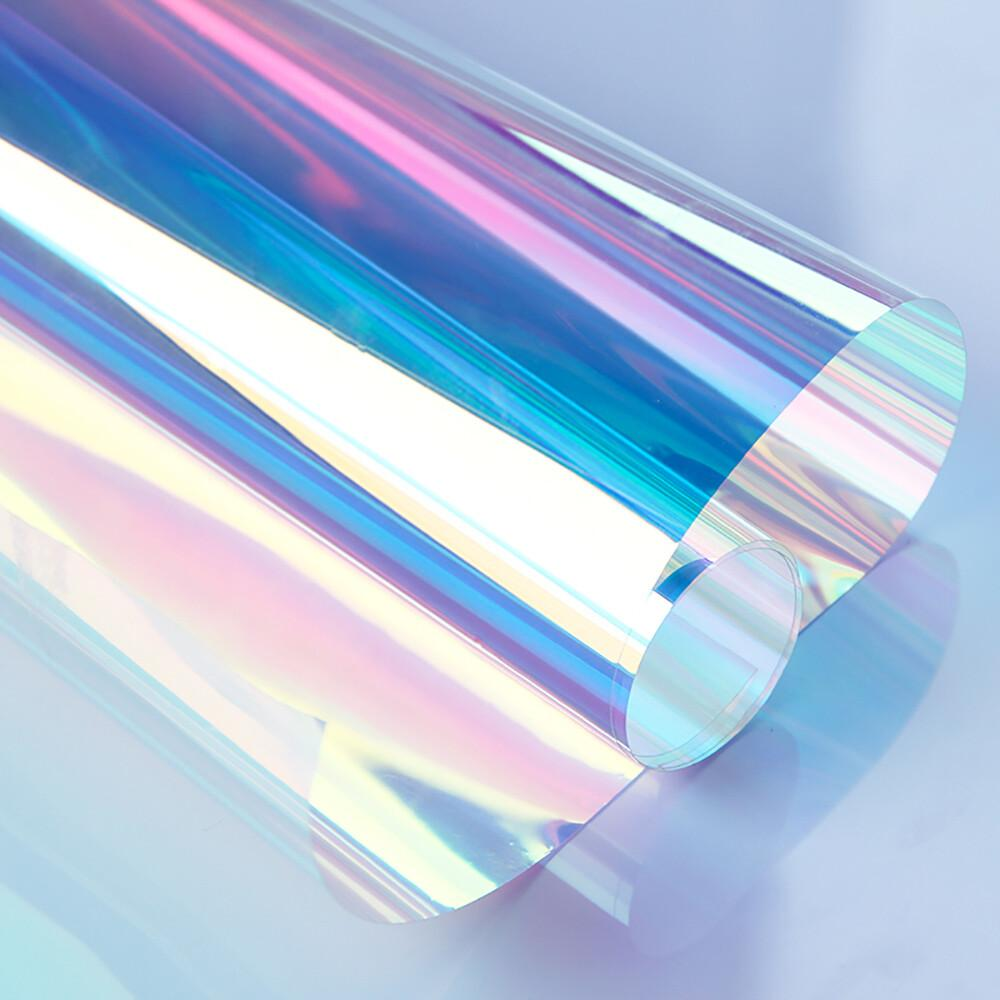
However, there is another material worth exploring: dichroic film.
Dichroic films are designed to produce different colours depending on the angle of light and viewing position. They are commonly available in decorative applications, architectural glass, window films, and automotive styling.
These films can create a visually similar iridescent effect without requiring the designer to deposit an optical coating directly onto the quartz.
One possible experimental approach is to laminate a suitable dichroic film onto or behind a transparent crystal element.
The crystal can then act as a protective and visual layer, while the film creates the changing rainbow appearance.
However, the result will depend on the particular film, its optical construction, the bonding method, and the geometry of the crystal.
It is important to understand that ordinary decorative dichroic film may not reproduce the exact optical behaviour, clarity, durability, or refinement of a professionally deposited titanium dioxide coating.
Still, it offers an interesting starting point for prototyping and creative experimentation.
How to Experiment with Dichroic Film and Rock Crystal
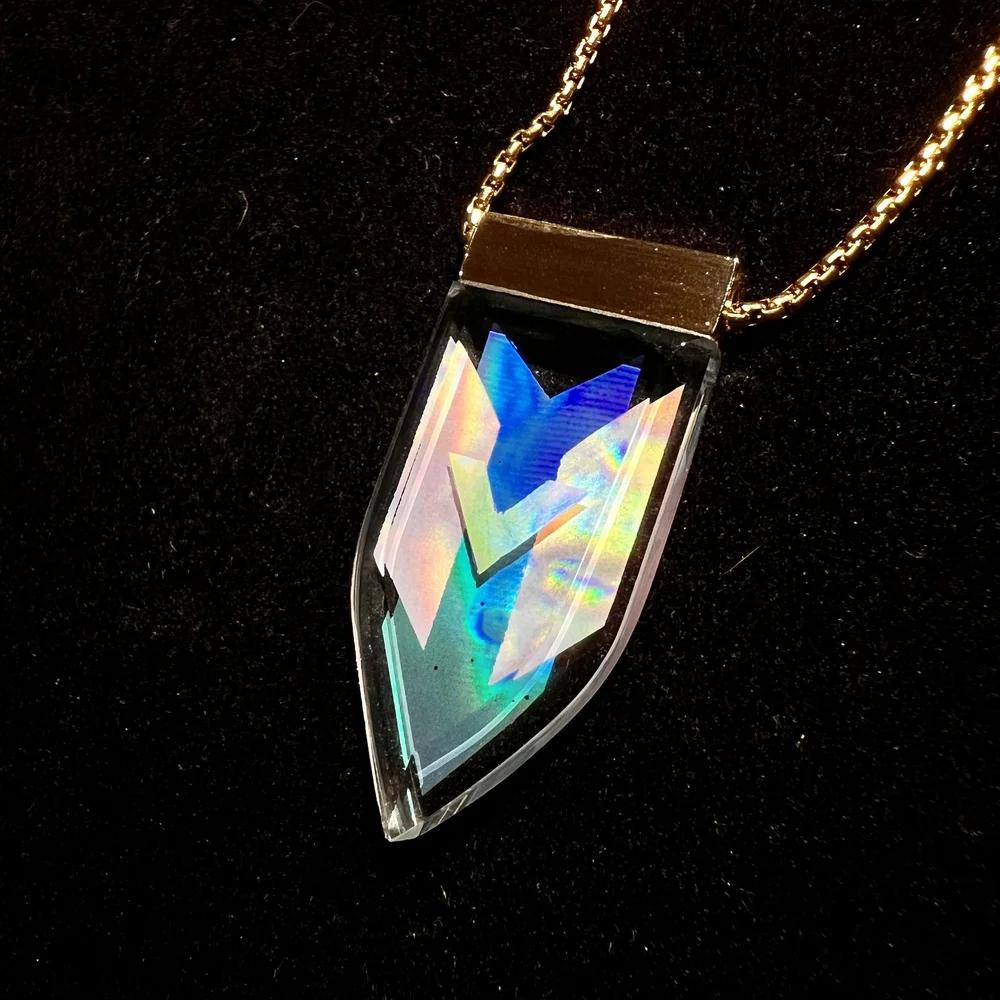
For jewellery designers interested in exploring this concept, a small prototype can help evaluate whether the effect works with their chosen materials.
Here is a possible experimental workflow.
Step 1: Select a Transparent Crystal
Start with a clear rock crystal or another suitable transparent quartz element.
The crystal should have a clean surface and minimal visible inclusions if the intention is to achieve a clear optical appearance.
Step 2: Choose an Appropriate Dichroic Film
Explore optical dichroic films that produce colour variations under different lighting and viewing angles.
Check the film’s transparency, thickness, adhesive compatibility, and resistance to environmental exposure.
Step 3: Experiment with Layering
Test different arrangements of the film and crystal.
For example, the film could be positioned behind the crystal, laminated onto a suitable surface, or incorporated into a layered construction.
Each arrangement may produce a different optical appearance.
Step 4: Introduce a Delicate Gold Frame
A minimal gold frame can support the crystal while allowing the rainbow effect to remain the main visual feature.
The frame should be designed around the crystal’s thickness, shape, and intended method of attachment.
Step 5: Test Under Different Lighting Conditions
Observe the prototype under natural sunlight, indoor lighting, and directional lighting.
Move the piece through different angles to evaluate the colour transitions, reflections, and transparency.
This stage is particularly important because an effect that looks impressive under one light source may appear very different under another.
Practical note: Use films and bonding materials specifically suitable for the intended application. Test adhesion, heat resistance, moisture exposure, scratch resistance, and long-term stability before developing a wearable piece.
Why Colour-Changing Jewellery Is Interesting for Modern Designers
Traditional fine jewellery often focuses on the natural colour, clarity, cut, and brilliance of gemstones.
Optical jewellery introduces another dimension: the interaction between light and engineered surfaces.
This opens up exciting possibilities for designers.
1. Dynamic Colours
Instead of displaying one fixed colour, the jewellery can reveal different shades depending on the surrounding light and viewing angle.
2. Minimalist Luxury
Transparent crystals and delicate gold structures can create a sophisticated appearance without requiring large quantities of coloured gemstones.
3. Experimental Materials
Designers can explore combinations of quartz, optical films, precious metals, and engineered coatings.
4. Unique Visual Identity
Colour-changing jewellery can create distinctive designs that stand apart from traditional gemstone arrangements.
5. New Design Opportunities
The concept can be explored in necklaces, pendants, earrings, rings, bracelets, and contemporary statement pieces.
Conclusion: When Science Becomes Jewellery Art
The beauty of this colour-changing necklace lies in the combination of material science and jewellery craftsmanship.
What appears to be a magical rainbow hidden inside a transparent crystal is actually the result of carefully controlled interactions between light and extremely thin material layers.
Titanium dioxide coatings and thin-film interference demonstrate how advanced optical engineering can transform ordinary transparent materials into extraordinary visual experiences.
And while dichroic films may not deliver exactly the same refinement as specialized industrial coatings, they offer an interesting alternative for designers who want to experiment with similar effects.
For modern jewellery designers, the possibilities extend far beyond traditional gemstones and metal settings.
At TASN Jewellery, we believe that innovative jewellery begins with curiosity, creativity, and precision-focused design. Exploring unusual materials and optical techniques opens new opportunities to transform imaginative concepts into detailed 3D jewellery designs.
Because sometimes, the most extraordinary jewellery does not simply reflect light. It transforms the way we see it.
