
Reverse Setting in Jewellery: The Unique Technique That Turns Diamonds Upside Down
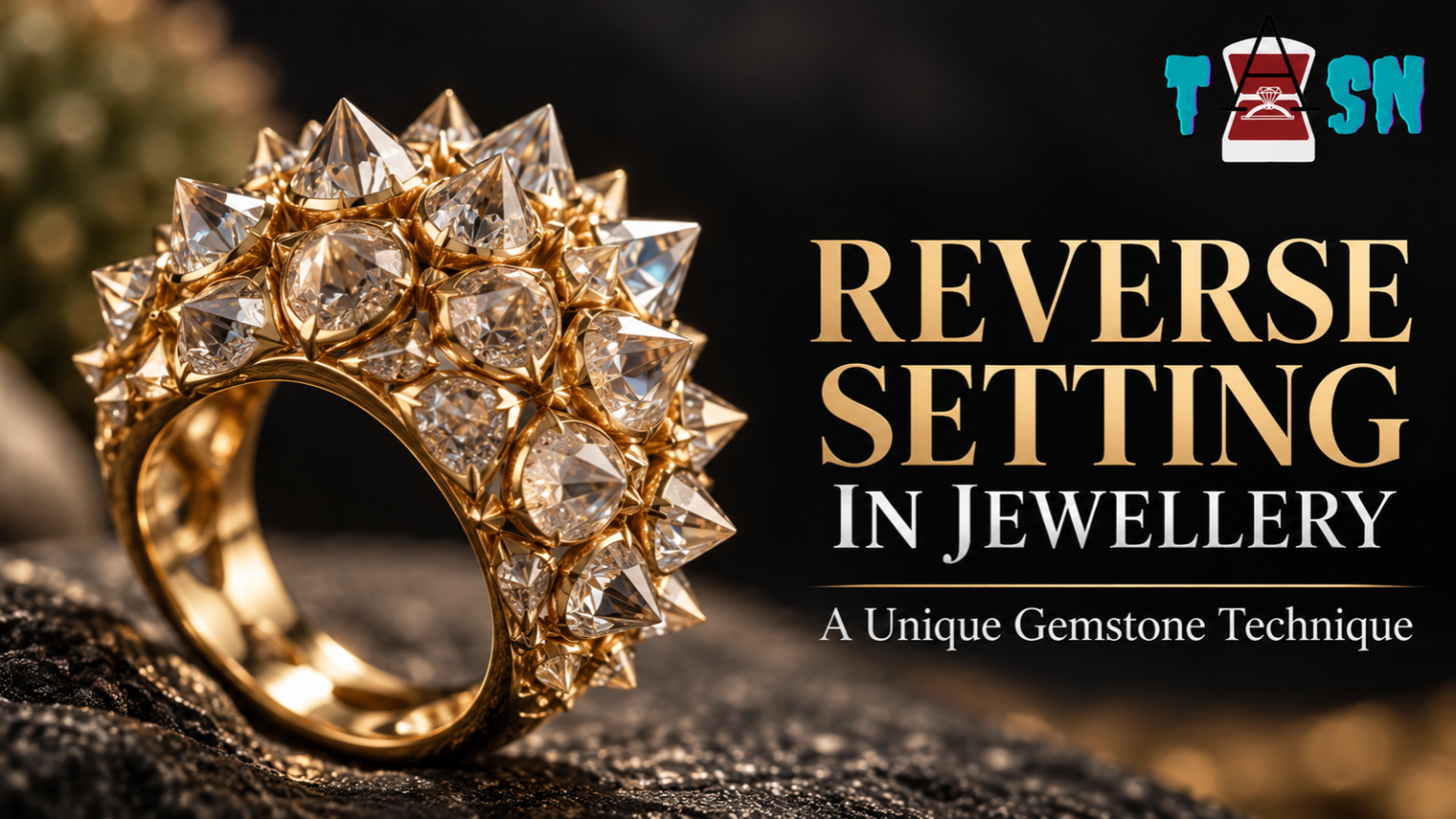
Jewellery design is constantly evolving, with designers exploring innovative techniques to transform traditional gemstones into extraordinary works of art. One such technique is reverse setting, an unconventional approach that turns the traditional gemstone-setting process upside down—literally.
Unlike conventional jewellery, where the pointed part of a gemstone is hidden beneath the setting, reverse-set jewellery places that pointed section on the outside. The result is a distinctive, textured appearance that draws inspiration from the natural world.
From statement rings to contemporary hoop earrings, reverse setting demonstrates how a small change in gemstone placement can completely transform the look and character of a jewellery piece.
In this article, we explore what reverse setting is, how it works, its inspiration, and why this distinctive technique is gaining attention in the world of fine jewellery design.
What Is Reverse Setting in Jewellery?
Reverse setting is a jewellery technique in which a gemstone is mounted upside down compared with its conventional orientation.
In a traditionally cut gemstone, two important parts are the crown and the pavilion. The crown is the upper portion of the stone, while the pavilion is the lower section that narrows toward a pointed tip, known as the culet in many faceted stones.
In conventional settings, the crown faces outward, allowing the gemstone’s facets to reflect light and display its brilliance. The pavilion is generally positioned inside or beneath the jewellery setting.
Reverse setting changes this arrangement.
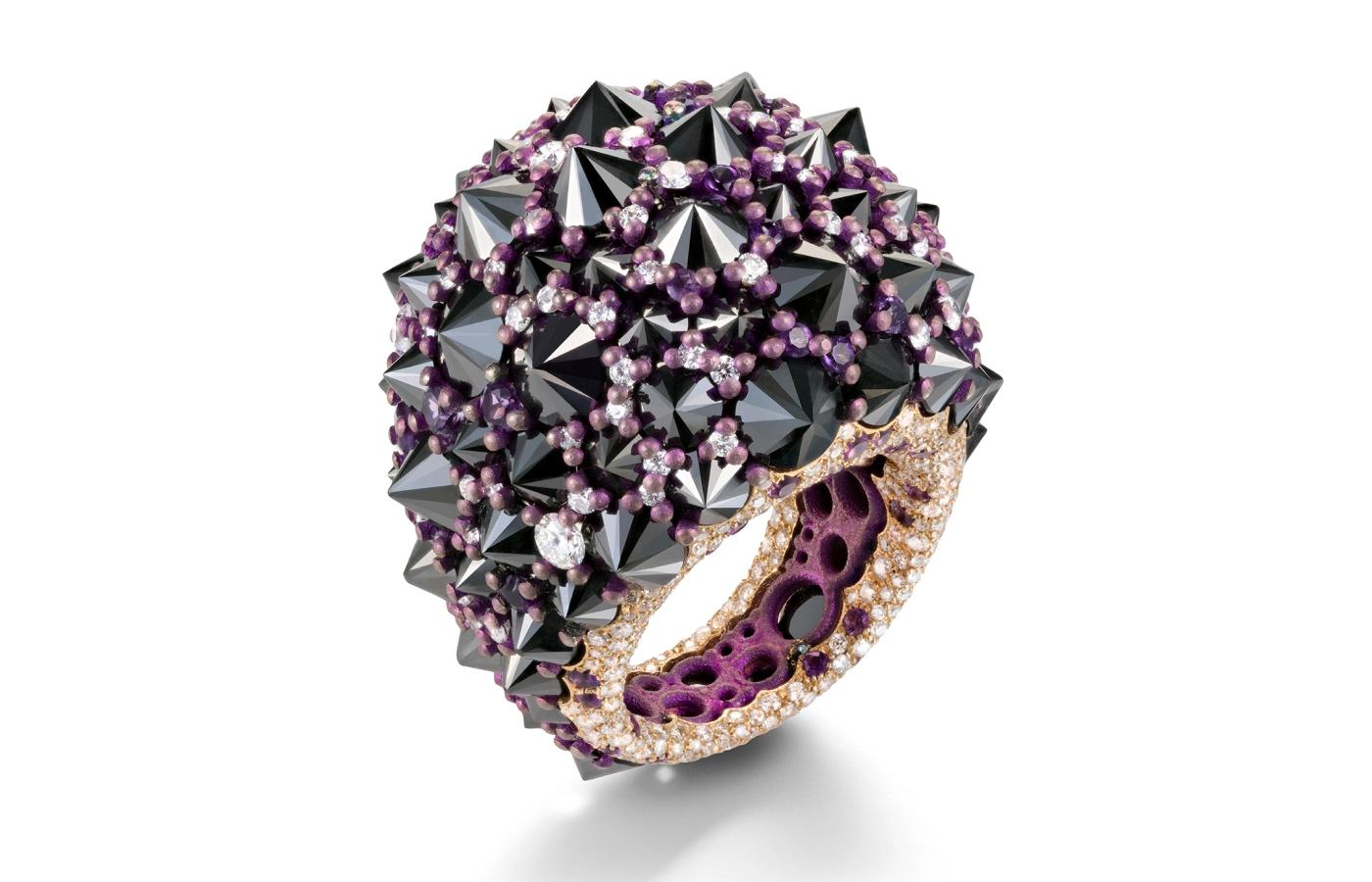
The gemstone is positioned so that its pointed pavilion faces outward, while its flatter crown faces toward the jewellery piece. This exposes the natural geometry of the gemstone and creates a distinctive, three-dimensional surface.
Rather than emphasizing the traditional sparkle of a gemstone, this technique highlights its shape, structure, and tactile appearance.
The result is jewellery that feels architectural, unconventional, and inspired by nature.
The Inspiration Behind Reverse-Set Jewellery

One of the most interesting aspects of reverse setting is its connection to the natural world.
The German jewellery house Hemmerle has explored reverse setting as an experimental design approach to create intensely textured jewellery surfaces. The idea draws inspiration from natural forms such as cacti, succulents, and pineapples.
These natural objects share a distinctive visual characteristic: their surfaces are made up of repeated points, edges, and intricate structures.
When gemstones are positioned with their pointed ends facing outward, they recreate a similar effect. Instead of a smooth, polished jewellery surface, the stones form a field of tiny peaks that resemble thorns, spines, or botanical textures.
This approach demonstrates how jewellery designers can translate elements of nature into wearable art.
The inspiration is not simply about copying the appearance of plants. It is about understanding the patterns, geometry, and structures found in nature and interpreting them through gemstones and precious materials.
How Does Reverse Setting Work?
Although reverse setting looks unusual, the gemstones themselves can still be cut and polished using conventional gemstone-cutting techniques. The difference lies in how the stones are oriented and secured within the jewellery design.
Here is how the concept works.
1. Selecting the Right Gemstones
The process begins with choosing gemstones whose shapes and proportions suit the intended design. The cut, dimensions, pavilion angle, and overall geometry influence the final appearance.
The selected stones must also be suitable for the specific setting method and intended use of the jewellery.
2. Reversing the Stone Orientation
In a conventional setting, the crown typically faces outward. With reverse setting, the gemstone is positioned in the opposite orientation so that the pointed pavilion becomes the visible feature.
This creates a completely different visual effect without necessarily changing the original cut of the gemstone.
3. Designing the Setting
The jewellery’s CAD model and setting structure must accommodate the reversed gemstone orientation. The design needs to account for stone dimensions, retention, clearances, and the exposed points.
This stage requires careful technical planning because the exposed pavilion geometry affects both the appearance and the practical construction of the jewellery.
4. Creating the Textured Surface
When multiple reverse-set gemstones are arranged together, their exposed points form a distinctive textured surface.
Depending on the design, the stones can be arranged in closely spaced patterns or more open compositions. The final result can range from subtle geometric detailing to an intensely spiked, sculptural appearance.
For jewellery CAD designers, reverse setting offers an opportunity to explore new surface treatments and unconventional stone arrangements.
Why Does Reverse Setting Look So Different?
Traditional jewellery often focuses on maximizing visible gemstone brilliance. Reverse setting shifts attention toward the physical structure of the stone.
Several characteristics make this technique visually distinctive.
An unusual gemstone orientation: The exposed pavilion creates a shape rarely seen in conventional jewellery.
A natural, organic texture: Repeated pointed stones can resemble plant spines, scales, or other natural surface patterns.
A sculptural appearance: The gemstones become part of the jewellery’s overall three-dimensional form rather than appearing only as decorative accents.
A contemporary aesthetic: Reverse setting challenges familiar jewellery conventions and creates designs that can feel artistic, experimental, and modern.
These characteristics make the technique particularly interesting for designers who want to move beyond traditional gemstone arrangements.
Reverse Setting in Rings and Hoop Earrings
One of the most appealing features of reverse setting is its versatility. Even relatively simple jewellery forms can take on a completely different character when the gemstone orientation changes.
Reverse-Set Rings
A ring with reverse-set gemstones can feature an unusually textured band or a striking sculptural surface. The exposed points create depth and visual contrast, making the ring stand out from conventional designs.
Depending on the composition, the result may look bold and architectural or delicate and intricately detailed.
Reverse-Set Hoop Earrings
Hoop earrings provide another interesting application. When reverse-set gemstones are arranged along the hoop, the exposed points create a distinctive surface that changes the overall silhouette of the piece.
A familiar jewellery shape can become more expressive and contemporary through this simple but impactful design decision.
Necklaces and Other Jewellery
The same concept can inspire pendants, necklaces, bracelets, and statement jewellery. Designers can experiment with different gemstone sizes, arrangements, and orientations to create unique visual patterns.
The possibilities depend on the stone geometry, setting construction, wearability, and the intended style of the finished piece.
The Role of 3D CAD Design in Reverse Setting
Reverse setting offers exciting creative opportunities, but it also introduces technical considerations that must be addressed before manufacturing.
This is where 3D jewellery CAD design becomes particularly valuable.
A carefully developed digital model allows designers to study the arrangement of reversed gemstones, assess their proportions, and evaluate how the exposed points interact with the surrounding structure.
A professional CAD workflow can help with:
- Stone positioning: Planning the orientation, spacing, and alignment of individual gemstones.
- Setting geometry: Designing structures that securely retain the stones in their reversed orientation.
- Surface detailing: Creating repeated patterns and consistent textures across the jewellery piece.
- Design visualization: Reviewing the overall form through 3D renders before manufacturing.
- Technical refinement: Identifying potential clashes, clearance issues, and structural limitations during the design process.
However, a visually appealing 3D model alone does not guarantee that a design is suitable for casting or everyday wear. Stone retention, exposed-point protection, comfort, and manufacturing tolerances must also be evaluated.
For designers and manufacturers, combining creative experimentation with precise CAD modelling can make unconventional setting techniques easier to develop and assess.
Challenges of Reverse-Set Jewellery
Like other specialized jewellery techniques, reverse setting requires thoughtful design decisions.
Because the pointed portions of the gemstones face outward, the design may need additional consideration regarding snagging, impact exposure, cleaning, and everyday comfort.
The setting must also securely retain each stone without compromising the intended appearance. The precise solution depends on the gemstone type, cut, material, jewellery structure, and manufacturing method.
For this reason, reverse setting is not simply a matter of turning a gemstone upside down. It requires a setting design that supports the reversed orientation while maintaining the visual concept.
These technical challenges are part of what makes the technique interesting for jewellery designers who enjoy exploring new forms and structures.
Reverse Setting: Where Nature Meets Jewellery Design
Reverse setting shows how innovation in jewellery design can come from rethinking familiar materials rather than changing them entirely.
By turning gemstones upside down, designers reveal a part of the stone that is usually hidden. The pointed pavilion becomes a defining visual feature, transforming smooth jewellery surfaces into intricate, natural-looking textures.
Inspired by cacti, succulents, and pineapples, the technique creates a connection between botanical forms and fine jewellery. It also opens up new possibilities for rings, earrings, necklaces, and other sculptural pieces.
For the modern jewellery industry, reverse setting is a reminder that small technical decisions can produce significant creative changes.
At TASN Jewellery, precision-focused 3D CAD design provides a way to explore such unconventional concepts, evaluate gemstone arrangements, and develop detailed digital models for further technical assessment.
Whether you are a jewellery designer, manufacturer, or creative professional, reverse setting offers an exciting example of how traditional gemstones can be reimagined through innovative design.
